FH6 Tuning Guide — How to Tune Any Car in Forza Horizon 6 (Beginner to Pro)
FH6 Tuning Guide — How to Tune Any Car from Scratch
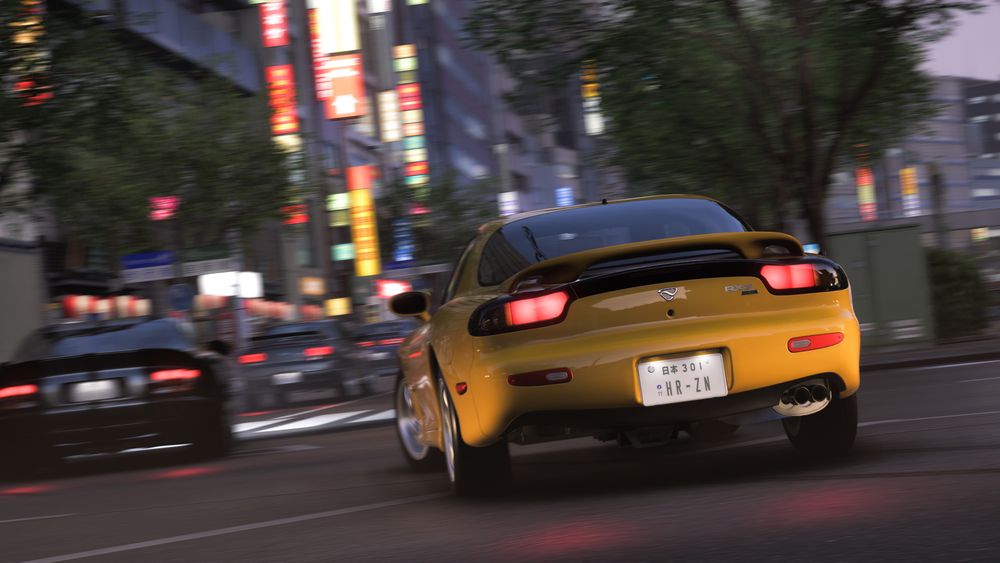
Tuning in Forza Horizon 6 looks intimidating. Nine tabs of sliders, dozens of numbers, and no explanation of what anything does.
Here's the truth: tuning is simple once you understand the order. Tune the wrong thing first and you'll chase your tail for hours. Tune in the right order and most cars take 5 minutes.
This guide covers every setting, the correct order, and base values for every build type.
The Golden Rule of Tuning
Always tune one thing at a time. Test it. Then move on.
Change five sliders at once and you'll never know which one fixed — or broke — your car.
The Correct Tuning Order
Most people open the tuning menu and start randomly. Don't. Follow this order:
1. TIRES       →  2. GEARING    →  3. ALIGNMENT
4. ANTI-ROLL    →  5. SPRINGS    →  6. DAMPING
7. AERO         →  8. BRAKES     →  9. DIFFERENTIAL
Each step builds on the previous one. A car with perfect differential settings but wrong tire pressure will still handle poorly.
1. Tires — Where It All Starts
Tire pressure is the single most impactful tuning setting. It affects everything: grip, responsiveness, and how the car behaves at the limit.
Tire Pressure (PSI)
| Build Type | Front PSI | Rear PSI | Notes |
|---|---|---|---|
| Road / Grip | 28-30 | 28-30 | Balanced for predictable handling |
| Race / Slick | 30-32 | 30-32 | Higher pressure = sharper response |
| Rally / Dirt | 26-28 | 26-28 | Lower = more grip on loose surfaces |
| Drift | 30-35 | 28-32 | Higher front helps initiate slides |
| Drag | 15-20 | 15-20 | Very low for maximum launch grip |
| Cross Country | 24-26 | 24-26 | Soft for bump absorption |
Diagnosing tire pressure problems:
| Symptom | Fix |
|---|---|
| Car doesn't turn in sharply | Lower front PSI by 1-2 |
| Car feels sluggish, unresponsive | Raise front PSI by 1-2 |
| Rear slides on corner exit | Lower rear PSI by 1-2 |
| Rear feels planted but slow | Raise rear PSI by 1-2 |
2. Gearing — Speed vs Acceleration
Gearing controls how your car delivers power. It's a trade-off: short gears accelerate faster but hit the rev limiter sooner. Long gears give higher top speed but slower acceleration.
Final Drive
The Final Drive slider is the master control. Adjust it first, then fine-tune individual gears.
| Goal | Adjustment |
|---|---|
| Faster acceleration | Raise Final Drive (higher number) |
| Higher top speed | Lower Final Drive (lower number) |
| Drift — more wheelspin | Raise Final Drive |
| Drag — optimize for 1/4 mile | Tune so you hit redline just before the finish line |
Individual Gears
After setting Final Drive, adjust individual gears:
- 1st gear: Long enough to avoid wheelspin on launch, short enough to pull hard
- 2nd-3rd: Close together for tight corners
- 4th-5th: Gradually longer for speed
- 6th+: Hit redline at your target top speed
Pro tip: For road racing, open the telemetry (pause → Cars → Tune Car) and watch your RPM through a test lap. If you're bouncing off the rev limiter on a straight, lengthen the top gear. If you can't reach redline, shorten it.
3. Alignment — How the Car Turns
Camber
Camber is the tilt of your tires. Negative camber = top of tire leans inward.
| Drivetrain | Front Camber | Rear Camber |
|---|---|---|
| RWD | -1.5 to -2.5 | -1.0 to -1.5 |
| FWD | -1.0 to -1.5 | -1.5 to -2.0 |
| AWD | -1.5 to -2.0 | -1.0 to -1.5 |
Rule: The driven wheels need less camber to maintain grip under power. Non-driven wheels can use more aggressive camber for cornering.
Toe
Toe is the direction your tires point when driving straight.
| Setting | Effect |
|---|---|
| Front Toe OUT (0.1-0.3) | Better turn-in response |
| Front Toe IN (-0.1 to -0.3) | More straight-line stability |
| Rear Toe IN (-0.1 to -0.3) | More stability, less oversteer |
| Rear Toe OUT (0.1-0.3) | More rotation, easier to drift |
Default for road racing: Front 0.1 toe-out, Rear -0.1 toe-in. These are tiny numbers — don't go beyond ±0.5.
Caster
Set to 7.0° and leave it. Caster affects steering weight and camber gain during turning. 7° is the sweet spot for almost everything. Drift cars can go to 7.5°.
4. Anti-Roll Bars — Mechanical Balance
ARBs control body roll. The balance between front and rear determines whether your car understeers or oversteers.
Mechanical Balance Target: 0.55-0.65
Mechanical Balance = Front ARB ÷ (Front ARB + Rear ARB)| Balance Value | Behavior |
|---|---|
| Below 0.55 | Oversteer (rear slides out) |
| 0.55 - 0.65 | Neutral — ideal for racing |
| Above 0.65 | Understeer (car won't turn) |
Starting values:
- Front: 20-30
- Rear: 18-25
Fix understeer: Soften front ARB OR stiffen rear ARB Fix oversteer: Stiffen front ARB OR soften rear ARB
5. Springs — Ride Height & Stiffness
Ride Height
Lower = better handling on smooth roads. Higher = better bump absorption off-road.
| Surface | Front | Rear |
|---|---|---|
| Asphalt / Road | Lowest possible | Lowest possible |
| Mixed / Street | 1-2 clicks above minimum | Same |
| Dirt / Rally | 2-3 clicks above minimum | Same |
| Cross Country | Highest | Highest |
Rake angle: Keep the rear 1-2 clicks higher than the front on RWD cars. This plants the rear under acceleration.
Spring Rate
| Build | Front Stiffness | Rear Stiffness |
|---|---|---|
| Road / Grip | 70-85% | 65-80% |
| Drift | 60-70% | 50-60% |
| Rally | 40-55% | 35-50% |
| Cross Country | 25-40% | 20-35% |
6. Damping — Controlling the Springs
Damping controls how quickly the springs compress and rebound.
Rebound (extension)
| Build | Front | Rear |
|---|---|---|
| Road / Race | 12-16 | 10-14 |
| Drift | 10-12 | 8-10 |
| Rally | 8-10 | 7-9 |
| Cross Country | 5-8 | 4-7 |
Bump (compression)
| Build | Front | Rear |
|---|---|---|
| All builds | 4-7 | 3-6 |
Bump should always be roughly 50-60% of Rebound. Higher bump = harsher ride but faster weight transfer.
7. Aero — Downforce vs Speed
More downforce = more grip in corners. Less downforce = higher top speed.
Aero Balance Target: 0.40-0.45
Aero Balance = Front Downforce ÷ (Front + Rear)| Build | Front | Rear |
|---|---|---|
| Time Attack / Circuit | Maximum | Maximum |
| Sprint / Highway | Minimum | Minimum |
| Balanced | 50-70% | 50-70% |
| Drift | Minimum (if adjustable) | Minimum |
Fix understeer: Increase rear downforce or decrease front Fix oversteer: Increase front downforce or decrease rear
8. Brakes — Stopping Power
Brake Balance
| Bias | Behavior |
|---|---|
| 55-60% Front (default) | Stable under braking |
| 50-55% Front | More rotation, can help turn-in |
| 60-70% Front | Very stable, resists spinning |
Brake Pressure
Leave at 100% unless your wheels lock up. If you lock up under braking, reduce to 90-95%. But first, check your ABS setting — with ABS On, leave pressure at 100%.
9. Differential — Putting Power Down
The differential controls how power is split between wheels. This is where most people go wrong.
AWD / 4WD
| Setting | Value | Notes |
|---|---|---|
| Front Accel | 50-70% | Lower = less understeer on throttle |
| Front Decel | 10-20% | Lower = more rotation off-throttle |
| Rear Accel | 70-95% | Higher = more rear bias, faster exit |
| Rear Decel | 10-30% | Higher = more stability off-throttle |
| Center Diff | 60-85% | Higher = more rear bias. Never below 50% |
For racing: Center 65-75%, Rear Accel 80-90% For drifting: Center 80-90%, Rear Accel 95-100%, Rear Decel 80-100%
RWD
| Setting | Value | Notes |
|---|---|---|
| Accel | 50-70% | Higher = both wheels lock sooner, more traction |
| Decel | 10-25% | Lower = more rotation off-throttle |
For racing: Accel 60-70%, Decel 15-20% For drifting: Accel 90-100%, Decel 80-100%
FWD
| Setting | Value | Notes |
|---|---|---|
| Accel | 70-90% | Higher = less wheelspin |
| Decel | 5-15% | Lower = more lift-off oversteer |
Symptom Checker — Fix Any Handling Problem
| Problem | Check First | Then Try |
|---|---|---|
| Understeer (won't turn) | Soften front ARB | Increase rear downforce, lower front tire pressure |
| Oversteer (rear slides) | Stiffen front ARB | Lower rear tire pressure, increase rear toe-in |
| Spins on launch (drag) | Lower rear tire pressure | Soften rear springs, adjust diff accel lower |
| Bouncy over bumps | Soften springs | Lower bump damping |
| Sluggish, lazy | Raise tire pressure | Stiffen springs, increase rebound |
| Can't hold a drift | Lock diff (100/100) | More rear tire pressure, toe-out rear |
| Wheelspin in 1st gear | Lengthen 1st gear | Reduce rear accel diff |
| Hits rev limiter too fast | Lengthen final drive | Lengthen top gears |
Quick Tuning Cheat Sheet
Road / Grip Build
Tires:      28-30 PSI, Sport/Semi-slick
Camber:     -1.5F / -1.0R (AWD)
Toe:        0.1F out / -0.1R in
ARB:        25F / 20R
Springs:    70%F / 65%R (low ride height)
Damping:    14F / 12R rebound, 6F / 5R bump
Aero:       Max downforce (circuit), balanced (street)
Brakes:     55% front bias
Diff:       AWD: 65% center, RWD: 65% accel
Drift Build
Tires:      30-35 PSI, Drift compound
Camber:     -2.5F / -2.0R
Toe:        0.2F out / 0.3R out
ARB:        28F / 15R
Springs:    65%F / 55%R
Damping:    10F / 8R rebound
Aero:       Minimum (if equipped)
Diff:       RWD: 100% accel / 100% decel
Drag Build
Tires:      15-20 PSI, Drag radials
Camber:     -0.5F / -0.5R (minimal)
Toe:        0F / -0.1R in
ARB:        10F / 30R (stiff rear)
Springs:    80%F (soft for weight transfer) / 30%R (stiff)
Damping:    6F / 15R rebound
Aero:       Minimum front, maximum rear (if adjustable)
Diff:       RWD: 80% accel / 30% decel
Rally / Dirt Build
Tires:      26-28 PSI, Rally compound
Camber:     -1.8F / -1.3R
Toe:        0.1F out / 0R
ARB:        18F / 16R
Springs:    45%F / 40%R (medium-high ride height)
Damping:    9F / 8R rebound, 5F / 4R bump
Aero:       Medium downforce
Diff:       AWD: 70% center
Cross Country Build
Tires:      24-26 PSI, Offroad compound
Camber:     -1.0F / -0.8R
ARB:        12F / 10R
Springs:    30%F / 25%R (max ride height)
Damping:    6F / 5R rebound, 4F / 3R bump
Aero:       Not applicable (no aero on off-road cars usually)
Diff:       AWD: 55-60% center
AWD vs RWD vs FWD — Key Differences
| AWD | RWD | FWD | |
|---|---|---|---|
| Best for | Racing, rally, beginners | Drift, drag, experienced drivers | Budget builds, tight city |
| Tuning difficulty | Easy — most forgiving | Medium — rewards precision | Hard — understeer tendency |
| Power handling | Best — puts power down | Limited by rear grip | Limited by front grip |
| FH6 changes | Similar to FH5 | Much better than FH5 — RWD is actually usable in S1/S2 now | Slightly improved |
| Spring bias | Balanced or slight rear bias | Rear-biased | Front-biased |
| Diff tuning | Most complex (3 settings) | Accel + Decel | Accel + Decel (simpler) |
When to Use a Pre-Made Tune
Not every car needs custom tuning. If you're:
- New to tuning
- Short on time
- Going for a meta-competitive build
Grab a community tune instead. Browse verified tunes with share codes on FH6 Tunes →
This guide reflects the FH6 tuning meta as of Series 1 (May 2026). Values will evolve as the community discovers optimal setups. Last updated: May 31, 2026.
New to car classes? Read the FH6 PI Classes Guide →